 A history by Lucien Zeal
Manic Street Preachers are a Welsh rock band formed in 1986. The Manics, as they are often called, have covered a wide variety of genres in their 40 years of music, from the glam-punk of their early days to drifting on the edge of Britpop in the late 90s to more traditional rock as they have grown older.
They are well-known, mostly in the UK, for hits like Motorcycle Emptiness, A Design For Life and If You Tolerate This Your Children Will Be Next, as well as the much-publicised disappearance of Richey Edwards. Outside of this, they have an enduring cult following who appreciate their abrasive personality, strong sense of aesthetics, extensive back-catalogue and strong, educated lyrics that typically discuss mental health struggles and left-wing politics.
James Dean Bradfield
vocals, guitar (1986-)
Nicky Wire
guitar, lyrics (1986-1988)
bass, lyrics (1988-)
Sean Moore
drums (1986-)
Miles 'Flicker' Woodward
bass (1986-1988)
Richey James Edwards
guitar, lyrics (1989-1995)
Formation and early releases
The Manic Street Preachers all come from Blackwood, a small ex-mining town in the south valleys of Wales. James Dean Bradfield and Sean Moore are cousins who lived together for much of their childhoods and they met Nicky Wire (real name Nicholas Allen Jones, the nickname comes from his height) at Oakdale Comprehensive School. They spent most of their youth in each others' bedrooms listening to music, watching television, reading magazines and books and taking in the changing cultural landscape of their industrial town under prime minister Margaret Thatcher. Eventually, they formed the Manics out of both boredom and a desire to change something in the world. James and Sean wrote most of the music while Nicky wrote the lyrics. They went through a few fourth members in their first months but the most notable was Miles Woodward, usually referred to as Flicker, who played bass. Nicky took over on the bass when Flicker left in 1988.
Their first single,Suicide Alley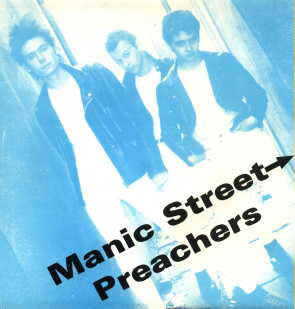 Suicide Alley, was released independently in June 1989. Only 300 copies were made and only a third of those had actual covers - collages of band photos and newspaper cuttings handmade by the band's close friend and future member Richey James Edwards. Suicide Alley is reminicent of classic punk and the influence of The Clash is especially clear. They sent the single to everyone they could, accompanied by long, handwritten letters filled with slogans like "we destroy aesthetic requirements, we are beyond the standards of taste" and hate for other contemporary bands. It recieved little attention but was reviewed in music magazine NME's August 19th edition with Steven Wells writing, "Retrogressive, exciting and inspired. You'll probably hate it." A reworked version of the b-side, Tennessee (I Get Low), was later featured on their debut album as just Tennessee.
Soon after Suicide Alley, Richey officially joined the band as a second guitarist (despite having never played guitar before - they were looking for aesthetics mostly) and joined Nicky with lyrics. Their first distinctive fashion started develop which was a uniform of tight white jeans and white school shirts with slogans like "rock 'n' roll suicide", "picturesque ruin" or "terminal young thing" spray painted on.
They played a couple of small shows in Wales in their early years but they knew that wouldn't get them anywhere. So, after Richey joined as the only member with a drivers' license, whenever they could get a slot at a pay-to-pay venue, they would hire a minivan, drive the 150 miles to London, play to a tiny crowd, then drive back the same night. Their first London show was reviewed in the Melody Maker's October 7th 1989 edition with Bob Stanley suggesting "they could become champions."[*]
Using the limited publicity of these London shows and reviews, the Manics released the EPNew Art Riot New Art Riot on the independent Damaged Goods records in June of that year. Its 4 tracks are still Clash-inspired, but are more sophisticated than Suicide Alley, especially in terms of lyrics, which are so complicated it's hard to pick them up. This release got them a few interviews in major publications; Nicky and Richey laid out their mission statement in a Melody Maker interview, stating "We've got to play ordinary venues at the moment but we dream of playing the rubble of London's palaces," and "We want to set fire to ourselves on Top of the Pops."[*] Into 1991, the mission statement expanded - they wanted to make one double album then dramatically split up and become "the most important reference point of the 90s,"[*] which later grew to a mission to outsell Guns N' Roses' 16-million-selling debut, Appetite for Destruction.
The band were looking for a manager and repeated their Suicide Alley marketing strategy by sending letters to anyone they could. Only Phillip Hall understood their difficulty getting gigs in London and came to watch them play closer to home the next day, and soon the Manics were under the management of the Hall or Nothing company. They lived with Phillip and his wife in London for much of early 1991 and were apparently ideal housemates, regularly cooking, cleaning and helping out. They were soon able to sign to the independent Heavenly records and releasedMotown Junk Motown Junk on January 21st 1991. Motown Junk is a fierce glam-punk song; the chorus shouts "I laughed when Lennon got shot" and the first line, "Never ever wanted to be with you, the only thing you gave me was the boredom I suffocated in," sums up the early Manics' attitude.
Next came the sarcasticYou Love Us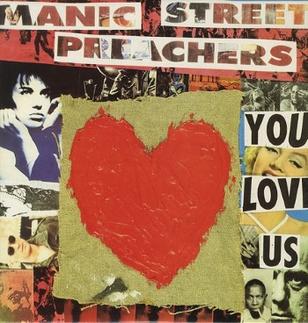 You Love Us on May 7th. It targets the music industry, government, the band's own newly-forming fanbase, nothing left off-limits. The first Manics music video was produced for You Love Us [YouTube link] and notably features a woman at the start who pulls off her wig, smudges her makeup and is revealed to be Nicky in drag.
The Manics achieved their first magazine cover story in Sounds' January 26th 1991 edition[*] but their most iconic was for NME's May 11th edition of that year[*]. Voted the second best ever NME cover in 2015[*], it features Nicky and Richey wearing mesh and leopard print on a gold foil background, "culture slut" written on Nicky's chest in lipstick and "VIH" (HIV backwards - it was done in a mirror) cut into Richey's with a school compass, both of them covered in love bites. In the article itself, they come across as trashy, sex-crazed, glamourous and proud to be hated more than loved with plenty of vitriol thrown at music journalists and other bands[*]. While James and Sean were the driving force behind their music, Nicky and Richey were the public face of the Manics because their androgynous sex appeal made them a perfect fit to take centre stage in photoshoots and their way with words - especially when expressing what they hate - made them the focus of most interviews. They were often referred to as the "glamour twins".
4REAL and Generation Terrorists
Shortly after the release of You Love Us, NME writer Steve Lamacq interviewed Richey, who became annoyed by questions about the band's authenticity and cut the phrase "4REAL" into his arm with a razor blade in front of the journalist, requiring stitches. NME photographer Ed Sirrs took the photo of the incident which was published in black-and-white in the May 25th 1991 issue after a debate about the graphic content of it - a recording of this debate was later released by the Manics as Sleeping With the NME, the b-side of future single Suicide is Painless and their longest song to date at 8:37. While the Manics' authenticity was seemingly confirmed, questions were raised about Richey's mental health, although the band considered it an important moment with Nicky claiming it was "the highlight of my year."[*]
Later in 1991, the Manics left Heavenly records for Columbia, a label owned by Sony. While some fans were disappointed they had "sold out", they had always said they wanted to create one massively selling double album, and signing to a major label was simply the next part of this plan. Their first single for Columbia came on July 29th,Stay Beautiful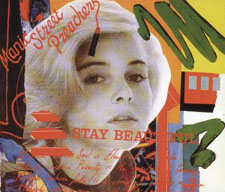 Stay Beautiful. Originally titled Generation Terrorists, Stay Beautiful had been a live staple for months, however the studio version censors the swearing in the chorus line, "Why don't you just... fuck off!" with a guitar lick. Live performances of the song now involve fans filling in the gap. This was likely a suggestion from producer Steve Brown to make the song more radio-friendly, and this worked, and Stay Beautiful was their first release to reach the UK Top 40 Singles - although only at #40.
Next came the double-a-sidedLove's Sweet Exile/Repeat Love's Sweet Exile/Repeat on October 28th. Love's Sweet Exile is a glam-metal version of an early punkish demo called Faceless Sense of Void and comes with a notoriously homoerotic music video [YouTube link] while Repeat is a staccato call-and-response against "queen and country".
Next, the band re-recordedYou Love Us You Love Us for January 20th 1992. This is the version to appear on their upcoming debut album, Generation Terrorists, and to match the rest of the album, it's much more metal-oriented than the Heavenly version and its new video [YouTube link] shares similarities with Love's Sweet Exile. It charted at #16, making it the most successful single from this period, and it remains a fan-favourite.
After three singles (with three more to come), widespread publicity and endless promises of "the most important reference point of the 90s,"Generation Terrorists Generation Terrorists was released on February 10th 1992. It's an all-out attack on capitalism, consumerism, the monarchy, arrogance, religion, power, pop culture and anyone and anything that had ever annoyed lyricists Nicky and Richey set to 73 minutes of big guitars, and while it was far from outselling Appetite for Destruction and peaked at a disappointing #13 on the UK Albums Chart (although it reached #1 on UK Rock Albums), it was recieved well and remains iconic decades later. Its sheer length is the main complaint; while the singles are incredible, some of the other tracks feel like filler - particularly the re-recorded version of Spectators of Suicide, a b-side to the Heavenly version of You Love Us, which pales in comparison to the original and the Bomb Squad remix of Repeat (Titled "Repeat (Stars & Stripes)" compared to the original "Repeat (UK)") which is interesting on its own but was a surprising addition to the album. The version released in the US, renamed Stars & Stripes, features a much shorter tracklist and Love's Sweet Exile/Repeat b-side Democracy Coma, however it still failed to chart. They found more foreign success in Japan, where there was a large audience for British rock bands and not so much the grunge that had taken over the US. Generation Terrorists cost Sony much more than expected and took nearly 6 months to record because nearly all of it was James on his own with Sean programming the drum machines.
Through the rest of 1992, the Manics toured extensively, including their first trips outside the UK to Europe, the US and Japan, and three more singles from Generation Terrorists were released. Opening trackSlash 'N' Burn Slash 'N' Burn, came on March 16th, targetting capitalism, environmental destruction and personal boredom as the perfect introduction to the album.
Motorcycle Emptiness Motorcycle Emptiness, a 6-minute classic about the hollowness of consumerist life, released next on June 1st. Despite its actual meaning, it gained popularity on driving compilations and remains one of their most well-known songs. It was constructed from a variety of demos the Manics had collected since their youth, but the iconic riff came when producer Steve Brown locked James in a studio room until he "had his Slash moment". Nicky and Richey didn't bother learning to play it for months after its release but now it is hard to imagine a setlist without it.
Finally, feminist anthemLittle Baby Nothing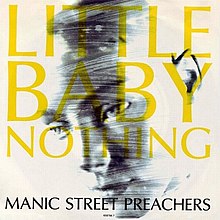 Little Baby Nothing was released on November 9th. The Manics wanted a female guest vocalist and originally asked Kylie Minogue, who they are, surprisingly or not, big fans of. In the end, they got Traci Lords, notorious for her porn career starting when she was underage, who was a perfect fit for a song about the exploitation of women. Little Baby Nothing features the lyric "culture, alienation, boredom and despair," which was a working title for Generation Terrorists and has come to sum up the Manics' whole career.
As part of a charity single split with the Fatima Mansions, the Manics recorded a cover of the theme from the 70s TV show M*A*S*H,Suicide Is Painless Suicide Is Painless on September 7th. Their version is loud and dramatic compared to the original and remains popular today. It charted at #7, making it their first top 10 single, and it birthed another particularly iconic magazine cover - Richey posing shirtless and covered in Marilyn Monroe stamps for NME's October 3rd 1992 issue[*], which was voted the best ever NME cover in the 2015 poll.
As 1992 came to a close, Nicky said during a gig that he hopes "Michael Stipe goes the same way as Freddie Mercury,"[*] referencing the R.E.M. singer's rumoured diagnosis of HIV. This is far from the first of these sorts of comments - for example, at the end of 1991 Richey claimed he would "always hate Slowdive more than Adolf Hitler"[*] - and is far from the last, too, as Nicky says, "I never wanna hold back from making those impulsive statements. If we're not impulsive, and we don't realise that we're fallible, we may as well just be the sort of boring band that are in Q."[*]
Stability and Gold Against the Soul
After Generation Terrorists, the Manic Street Preachers' future as a band was uncertain. They had repeatedly promised to split after their first album, but they had also promised to outsell Guns 'N' Roses and that was obviously never going to happen. Interviews throughout 1992 suggested they they had more to say, or their original contract with Columbia records involved more than the one album they claimed, or they never meant that in the first place - Richey says "if we hadn't believed that, or lied to ourselves that we did, we'd have disintegrated after the first few London dates like so many other provincial bands."[*] They wrote and recorded much of the "hypocritical second album" in late 1992 and early 1993, and on June 1st 1993, the first new single,From Despair to Where From Despair To Where, was released. The lyrics are more on-the-nose melancholic with lines like "There's nothing nice in my head / The adult world took it all away" than Generation Terrorists which is laced in metaphor, and shows a considerable change from the glam-metal sound to more soft rock, and influenced by grunge. Despite the friendlier musical style, it still only charted at #23. From Despair to Where remains a fan-favourite, though.
The second Manics album,Gold Against the Soul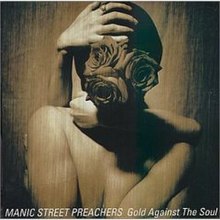 Gold Against the Soul, was released shortly afterwards on June 21st. It sounds more focussed than its predecessor - its songs come from a few months of writing rather than years - and it leans more personal than political in its melancholia, although songs like Drug Drug Druggy and the title track reflect the political climate of 1993. Richey describes the latter as "an apocalyptic vision of Britain from the Thatcher years to the 'caring' Nineties."[*] It charted at #8 but reviews were mixed and the band have since often referred to it as their least favourite of their albums. However, several of its tracks remain popular, such as the opener, Sleepflower. It references the common use of substances to be able to fall asleep, as the band often discussed: "there hasn't been a single day where Richey hasn't had at least half a bottle of vodka. Neither him nor James can go to sleep at night without drinking that much."[*]
La Tristesse Durera (Scream to a Sigh)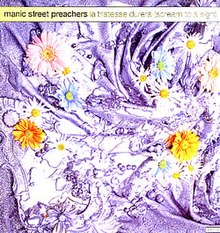 La Tristesse Durera (Scream to a Sigh) was released as a single on July 19th. Its title comes from the rumoured last words of Vincent Van Gogh, translating to "the sadness will last forever", and the song criticises the lack of respect people have for war veterans compared to the selfishness of the Manics' generation. Richey says, "it's always a beautiful image every year when the war veterans turn out at the Cenotaph, and everyone pretends to care about them - but then they're shuffled off again and forgotten."[*] La Tristesse Durera is the only Manics song Richey actually plays guitar on, and even then only one chord. He also does backing vocals on Gold Against the Soul track Nostalgic Pushead.
The third Gold Against the Soul single was the darkly funkyRoses in the Hospital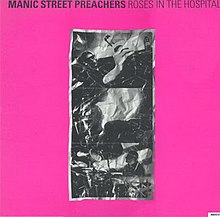 Roses in the Hospital on September 20th. The lyrics, written mostly by Nicky, seem to refer to a person hurting themselves in hospital, which drew further attention to the injuries that had been appearing on Richey in recent photoshoots and the mental health of the whole band. The repetition of "forever, ever delayed" in the song's outro has become another line like "culture, alienation, boredom and despair" to sum up their views at the time and would later inspire the title of their 2002 greatest hits album.
Finally,Life Becoming a Landslide Life Becoming a Landslide was released on January 31st 1994. It's about "the idea that the first thing a baby does is shriek at the horror of it all. And as when you get to adolescence, the rewards of being older don't really give you any satisfaction whether it's getting a car or a fuck or a CD player."[*] This release is also notable for b-side Comfort Comes, a violent and dark song that functions as a premonition of the Manics' next direction.
Phillip Hall and The Holy Bible
Manics manager Phillip Hall died in late 1993 to cancer. This had a profound effect on the band; they had suddenly lost the "first person to really believe in our music."[*] In his memory, they organised a concert for March 2nd 1994 in support of the Imperial Cancer Research Fund.
Work on the now-inevitable third Manics album started in 1994 and it was suggested to be "very bleak, just like the human condition" and inspired in part by their visits to places of "human suffering on a large scale"[*] like Hiroshima, Dachau and Belsen. They chose to record it in a cheap, cold studio in Cardiff as opposed to the decadent residential studio used for Gold Against the Soul in an attempt to create a claustrophobic sound that would match the tone of the lyrics and would inspire more focus than the previous two records. The success of this effort was first seen on May 31st with the double-a-sidedFaster/P.C.P.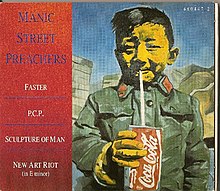 Faster/P.C.P.. The sharp, post-punkish Faster is considered by many fans, critics, and the band themselves to be their best song for its explosive guitars and intense lyrics covering self-image, self-harm and "the way that everything's speeded up to such an extent that nobody knows if they've got any meaning any more". The line "I know I believe in nothing but it is my nothing" stands out as one of their greatest. According to Nicky, it is "probably the first time that we've written a song and not completely understood what we've written."[*] It features a sample from the film adaptation of George Orwell's book 1984 at the start. P.C.P., meanwhile, contests censorship and political correctness and supports complete freedom of speech, as the Manics have spoken for many times.
The aesthetic of the new album, now confirmed to be called The Holy Bible, took shape as leopard print and gold were abandoned for dark camouflage and military uniform. When they performed Faster on Top of the Pops in June, James' balaclava had viewers assume they were supporting the IRA and the BBC reported a record number of complaints. The notorious balaclava is now reportedly used as a tea cosy in the band's studio.
The second single,Revol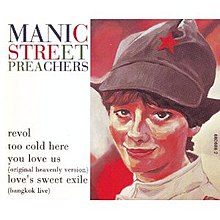 Revol, was released on August 1st. It rattles through a list of historical and contemporary political figures to compare their failures to failures in relationships, possibly referencing Richey's own struggles - the title is both "lover" backwards and the first half of "revolution".
In August, Richey was admitted to a mental health clinic after suffering "nervous exhaustion" after their recent touring. Rumours of a suicide attempt or that the band were splitting up spread, but were quickly shot down - management insisted, "even from the clinic he is still very much involved with the artwork design and other marketing aspects for the forthcoming album."[*] However, it was clear his condition was more extreme than nervous exhaustion. Richey would later explain in another cover story: "It is something very gradual, and I don't think you even realise what's really happening. You've got a different perspective on yourself and what's actually going on. It just comes to a point where your mind thinks that it can cope but maybe your body can't carry on. [...] It's also a question of knowing you can do it to yourself. A tattoo does not hurt. It's just like a pinprick. A piercing does not hurt. But knowing you can actually do something which the body does not like... I'm weak, all my life I've felt weak compared to other people, if they want to crush me they can - but I know I can do things that other people can't."[*] The Manics played a few festival dates in the summer as a three-piece, notably Reading Festival.
The Holy Bible The Holy Bible met the world on August 30th 1994. Reviews immediately focussed on the lyrics, which were as "bleak" as promised; the chorus of just the first track, Yes, mentions mutilating young boys to sell them as female sex slaves ("In these plagued streets of pity you can buy anything") and uses prostitution as a metaphor for their recent lives in the media ("May as well be Heaven, this Hell, smells the same"), Archives of Pain criticises the glorification of serial killers and calls for harsher punishment ("Not punish less, rise the pain / Sterilise rapists") and 4st 7lb, named after a theorised minimum weight a starving adult can survive, documents the slow death of an imagined girl suffering anorexia nervosa ("Clingfilm on bone, I'm getting better"). Mausoleum and The Intense Humming of Evil are directly inspired to visits to the Hiroshima peace museum and Nazi concentration camps and the dismissal of the events surrounding these places by ordinary people - "If anyone goes to those places and doesn't feel an immense sense of loss, they've got no soul."[*] The album is heavily referrential, full of specific names and events and the majority of the songs feature relevant samples. Around 70% of the lyrics are Richey's, compared to his previous close teamwork with Nicky, and this drew the obvious questions about his mental state. Musically, it leans into the Manics' post-punk influences rather than their earlier metal-inspired works. The change of sound and the ultra-dark theming put the phrase "commercial suicide" in several journalists' mouths, but it charted at #6 and continues to take top spots on lists from 'best of 1994' to 'best ever'. Most releases of the album come with a dedication to Phillip Hall.
The final single from The Holy Bible wasShe Is Suffering She Is Suffering on October 3rd. It discusses "desire", and Richey calls sex "nature's lukewarm pleasure." It features a live cover of The Drowners by Suede (similarly 'outsider' British alternative rock band) as a b-side, recorded with ex-Suede guitarist Bernard Butler at Phillip Hall's memorial concert. After Richey left hospital, the band embarked on a European tour alongside Suede. Then, to close off the year, they played three consecutive dates at the London Astoria, which have since gained significance as the last dates to include Richey.
workin on it